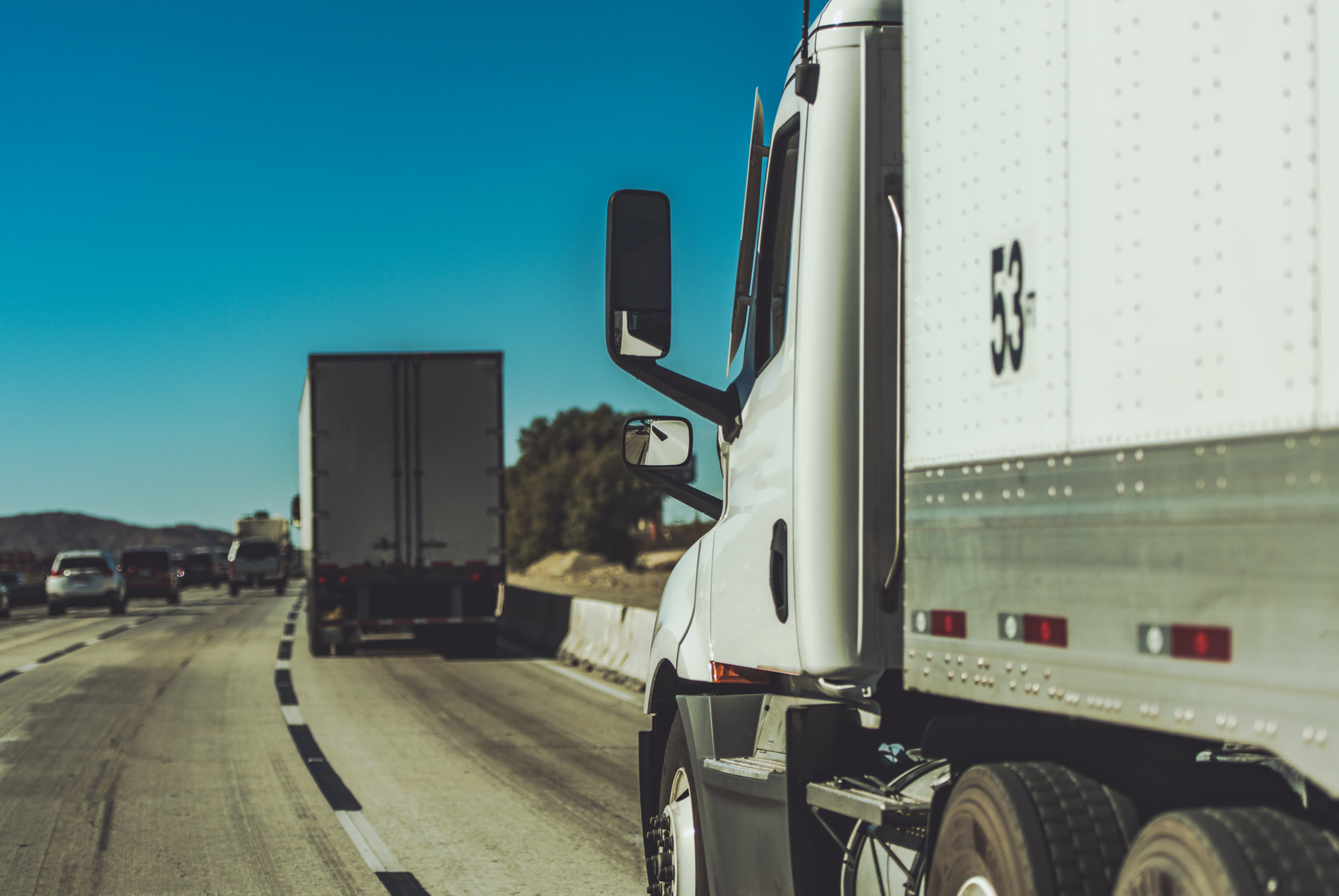
A truck booked for your shipment alone.
The opposite of LTL. The fastest, most secure way to move bulk freight on the road.
Full Truckload (FTL)means an entire 53-foot trailer is booked exclusively for your shipment. There’s no co-loading with other shippers, no terminal stops, no third-party handling — the freight is loaded at your dock, the trailer is sealed, the driver runs direct to the destination, and the trailer is opened by the consignee.
Most freight networks split FTL into three buckets: contract FTL (annual rates locked in for high-volume lanes), spot FTL (market-rate one-off bookings), and dedicated FTL (a truck that runs your lanes every day on a private rate). Qeep handles all three, with a 24/7 desk and same-day cover on most North American lanes.

When does FTL beat LTL?
The break-even is typically around 6–8 pallets. Below that, LTL is usually cheaper because you only pay for the trailer space you use. Above that, LTL accessorials (liftgate, residential, inside delivery, reweigh fees) add up fast — and FTL becomes both cheaper and faster. Time-sensitive, fragile, or high-value freight is almost always better on FTL regardless of pallet count, because cargo never leaves the trailer until it reaches your dock.
How is FTL priced?
FTL is priced per-mile based on the lane’s current market rate (tracked daily via DAT and Greenscreens indexes), plus a fuel surcharge tied to the EIA national diesel average, plus deadhead miles the driver must travel empty to your pickup. Accessorials — detention after 2 free hours, lumper fees, layover, driver-assist — are passed through with no margin. There’s no mystery in an FTL invoice.


